
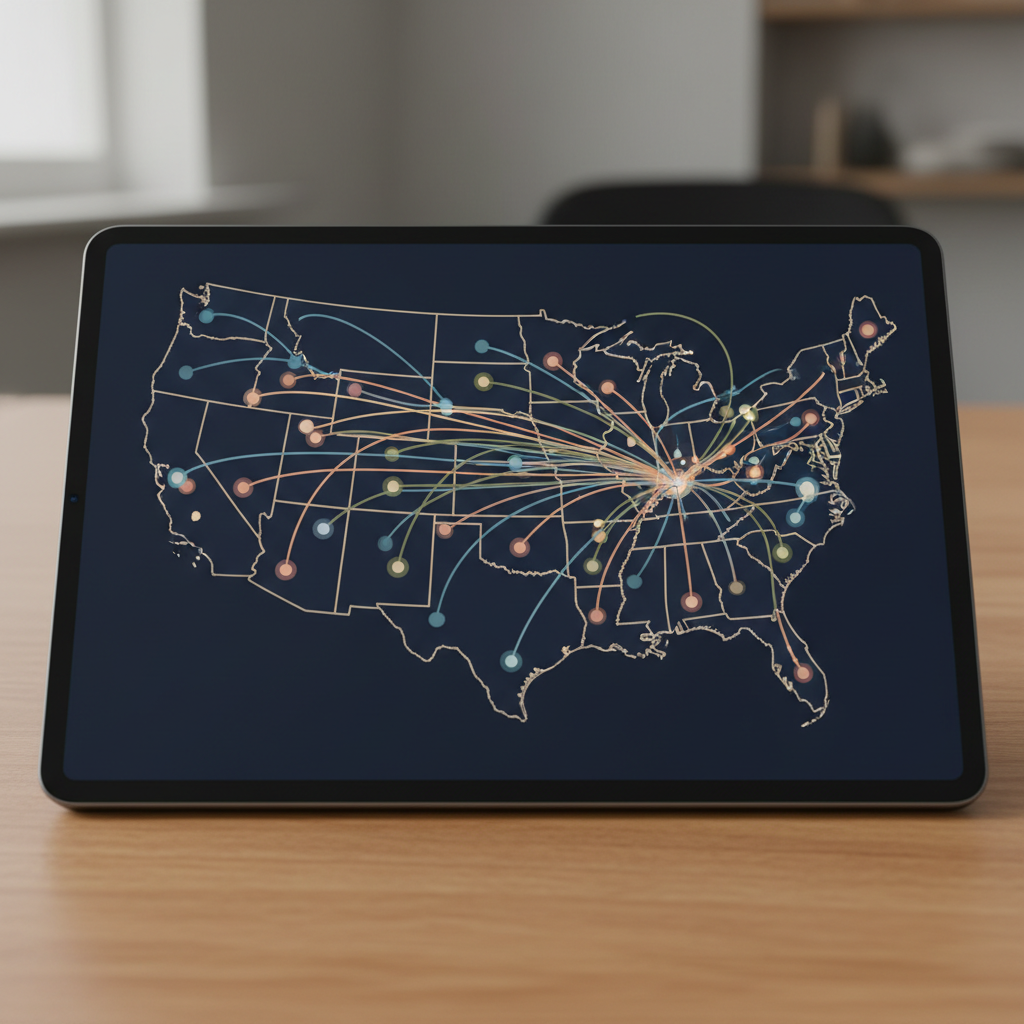
For non-US founders operating a US LLC in 2026, understanding sales tax nexus is paramount. Sales tax, unlike income tax, is collected by sellers and remitted to state and local governments. The concept of "nexus" determines if your business has a sufficient connection to a state, requiring you to collect and remit sales tax. Ignoring these rules can lead to substantial penalties and legal complications, especially with increased state enforcement for remote sellers.
Understanding Sales Tax Nexus: The Basics for Non-US LLCs
Sales tax nexus describes the necessary connection between your US LLC and a state that compels you to collect and remit sales tax. Without nexus in a state, you are generally not required to collect sales tax from customers in that state. With nexus, however, it becomes a legal obligation.
For non-US founders, the challenge often lies in recognizing that nexus can be established without a physical presence. The Wayfair v. South Dakota Supreme Court decision in 2018 fundamentally changed sales tax laws, allowing states to impose collection duties based on sales volume or transaction count, known as economic nexus.
Physical Nexus Triggers for Remote Sellers in 2026
Even as a non-US resident, certain activities within a US state can establish physical nexus for your LLC. This includes having a physical office, warehouse, or retail store. Even temporary presence, like attending trade shows where you make sales, can create short-term nexus.
Using third-party services like fulfillment by Amazon (FBA) also creates physical nexus. If your inventory is stored in an Amazon warehouse in Texas, you likely have physical nexus in Texas. It is crucial to track where your inventory is located, as this dictates where you must register for sales tax permits.
Economic Nexus: The Post-Wayfair Reality for 2026
Economic nexus is the most common trigger for remote sellers in 2026. Most states have adopted thresholds, typically $100,000 in gross sales or 200 separate transactions into the state within a calendar year. Once your LLC crosses either threshold, you establish economic nexus.
These thresholds vary slightly from state to state. For example, some states only count gross sales, while others count both. Staying current with each state's specific rules is complex, requiring careful monitoring of your sales data for all 50 states.
Affiliate and Click-Through Nexus Considerations
Beyond physical and economic factors, other types of nexus can trigger sales tax obligations. Affiliate nexus arises if your LLC has agreements with in-state individuals or businesses who refer sales to you in exchange for a commission. Their physical presence can be attributed to your business.
Click-through nexus is similar. If you pay a commission to an in-state resident for sales generated through a link on their website, some states may consider that a form of nexus. These rules are less common but still apply in certain jurisdictions, adding another layer of complexity for non-US founders.
The Importance of Timely Registration and Remittance
If your US LLC establishes nexus in a state, you must register for a sales tax permit before collecting sales tax. Collecting sales tax without a valid permit is illegal and can result in severe penalties. Most states have online registration portals.
After registration, you must collect the correct sales tax rate from your customers in that state and file periodic returns, usually monthly, quarterly, or annually. Penalties for late filing, underpayment, or non-filing can include fines, interest, and even criminal charges in extreme cases.
Automating Sales Tax Compliance for Remote US LLCs
Managing multi-state sales tax manually is nearly impossible for most businesses. E-commerce platforms often have built-in sales tax calculation features, but these may not cover all state and local nuances. Integrating with specialized sales tax automation software is highly recommended.
Providers like TaxJar, Avalara, or Stripe Tax can calculate sales tax in real time, help with registration, and automate filing. While these services have a cost (e.g., $19 to $99 per month for small businesses), they significantly reduce compliance risk and save countless hours.
LLC cost calculator
Work out what an LLC actually costs to keep alive. Pick a state, a number of years and your Registered Agent price.
| State filing fee, once | $100 |
| Annual report, 4 renewals | $240 |
| Registered Agent, 5 years | $0 |
| Total over 5 years | $340 |
Estimate only. State fees are the published amounts at the time of writing and can change. Taxes, foreign qualification in your operating state and optional services are not included.
BF Solutions LLC, Sheridan, Wyoming. WY Filing ID 2026-001992102.
We file with the Secretary of State and apply for your EIN with the IRS.
Most US LLC filings are completed in a few business days, EIN follows after approval.
Talk to the team that handles your file, before and after formation.
Frequently asked questions
What is sales tax nexus for a non-US LLC?+
Sales tax nexus is the connection between your US LLC and a state that obligates you to collect and remit sales tax from customers in that state.
Does having inventory in an Amazon warehouse create nexus?+
Yes, storing inventory in states via Amazon FBA or other third-party fulfillment services typically creates physical nexus in those states.
What is economic nexus for US LLCs in 2026?+
Economic nexus is established when your US LLC exceeds a state's designated sales threshold, usually $100,000 in sales or 200 transactions, even without physical presence.
Do I need to register for a sales tax permit in every state with nexus?+
Yes, once you establish sales tax nexus in a state, you must register for a sales tax permit with that state's tax authority before collecting any sales tax.
What are the penalties for not complying with sales tax nexus rules?+
Penalties for non-compliance can include fines, interest on unpaid taxes, and in severe cases, legal action from state tax authorities.
Can a non-US resident LLC get audited for sales tax?+
Yes, non-US resident LLCs are subject to state sales tax audits if they are deemed to have nexus and are not in compliance.
Open your US LLC the easy way
Formation, EIN and Registered Agent in one fixed-price package. Real humans on WhatsApp when you need help.
Bastion Formations is a company formation agent that files LLCs and corporations in all 50 US states and incorporates companies in the UAE, UK, Hong Kong, Singapore, Canada, Thailand and Indonesia. Our team files with the Secretary of State directly, applies for EINs with the IRS and supports founders through bank account opening. This article reflects fees and filing rules we work with day to day.
- Registered entity
- BF Solutions LLC
30 N Gould St Ste R, Sheridan, WY 82801, USA
WY Filing ID 2026-001992102 - UAE office
- Online Solutions LLC, Licence 2221203
Sharjah Free Zone, United Arab Emirates
Fees checked and article last updated on June 4, 2026. State fees can change, so confirm before you file.